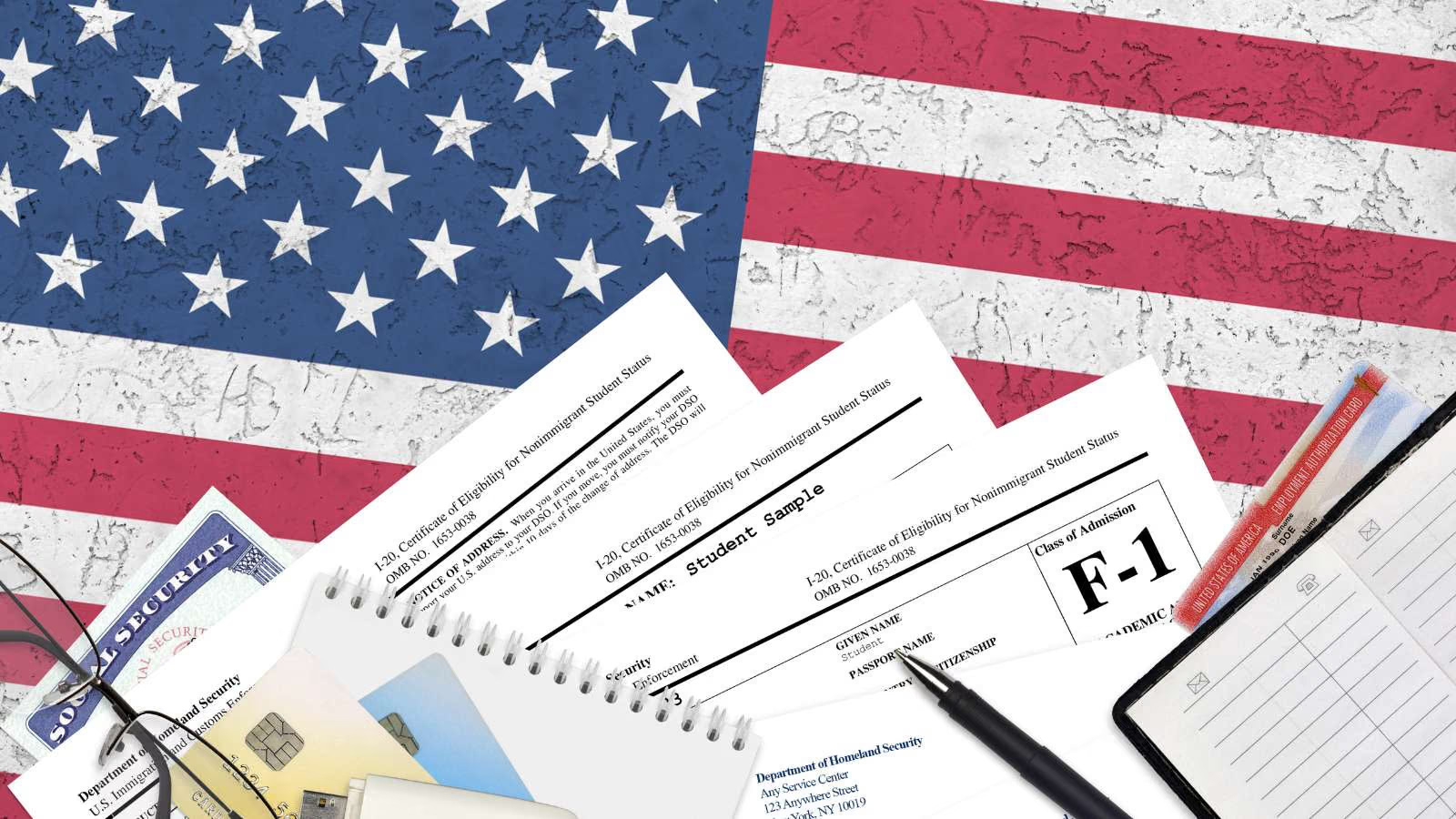
An immigration expert demands action after more than 7,000 Indian students overstayed US visas in 2023
Out of all the general categories of temporary entry, the F and M student visa categories have the greatest overstay rates. In a recent hearing before the U.S.
Out of all the general categories of temporary entry, the F and M student visa categories have the greatest overstay rates. In a recent hearing before the U.S. House Committee on the Judiciary, immigration expert Jessica M. Vaughan revealed that over 7,000 Indian students and exchange visitors overstayed their visas in the United States in 2023. Vaughan of the Center for Immigration Studies encouraged Congress to consider significant changes to the country's immigration policies, particularly with regard to the H-1B visa program. Out of all the major categories of temporary entry, the F and M visa categories have the greatest overstay rates. Overstay rates for students and exchange visitors exceed 20 per cent in 32 nations. Over 2,000 people from Brazil, China, Colombia, and India were overstaying their student and exchange visas, according to Vaughan's testimony. Of these, 7,000 were from India. She pointed out that 32 countries had overstay rates of more than 20%. Vaughan noted that the F and M visa categories, which allow foreign students to study in the United States, had the highest overstay rates among temporary admission categories. While the F-1 visa permits entrance for full-time students at accredited colleges, the M-1 visa is designed for non-academic and vocational programs.In order to improve internal enforcement and ensure that applicants for student visas plan to return to their home countries after completing their studies, Vaughan proposed amending the regulations governing the issuing of visas. Vaughan suggested restricting yearly H-1B visas to 75,000, giving preference to higher-skilled individuals, and limiting H-1B visas for specialist jobs to two-year periods with extensions under certain conditions.Vaughan proposed abolishing foreign visa sponsorships in order to stop exploitative practices and reforming visa procedures to provide chances for American workers.With 427,000 Indian students, Canada is the largest host country, followed by the US (337,630), UK (185,000), Australia (122,202), and Germany (42,997), according to data supplied by the Ministry of External Affairs.Vaughan's testimony highlights a critical vulnerability in the U.S. immigration system and raises concerns about the integrity of the student visa program. The significant number of Indian student visa overstays underscores the need for more effective mechanisms to ensure that foreign students comply with the terms of their visas and return home after completing their studies. The high overstay rates, particularly from certain countries, suggest that the current screening and enforcement measures may be inadequate. Vaughan's recommendations for stricter visa issuance regulations and improved internal enforcement aim to address this issue by strengthening the vetting process and holding visa holders accountable for their stay in the United States.The proposed reforms to the H-1B visa program, including a cap on the number of visas issued and stricter eligibility criteria, reflect a broader debate about the role of foreign workers in the U.S. economy. Vaughan's emphasis on prioritizing higher-skilled individuals and limiting visa durations suggests a desire to ensure that the H-1B program serves its intended purpose of attracting top talent while also protecting opportunities for American workers. The call to eliminate foreign visa sponsorships points to concerns about potential exploitation and the need to create a level playing field for domestic workers. These proposed changes could have significant implications for both U.S. businesses that rely on foreign talent and individuals seeking to work in the United States.