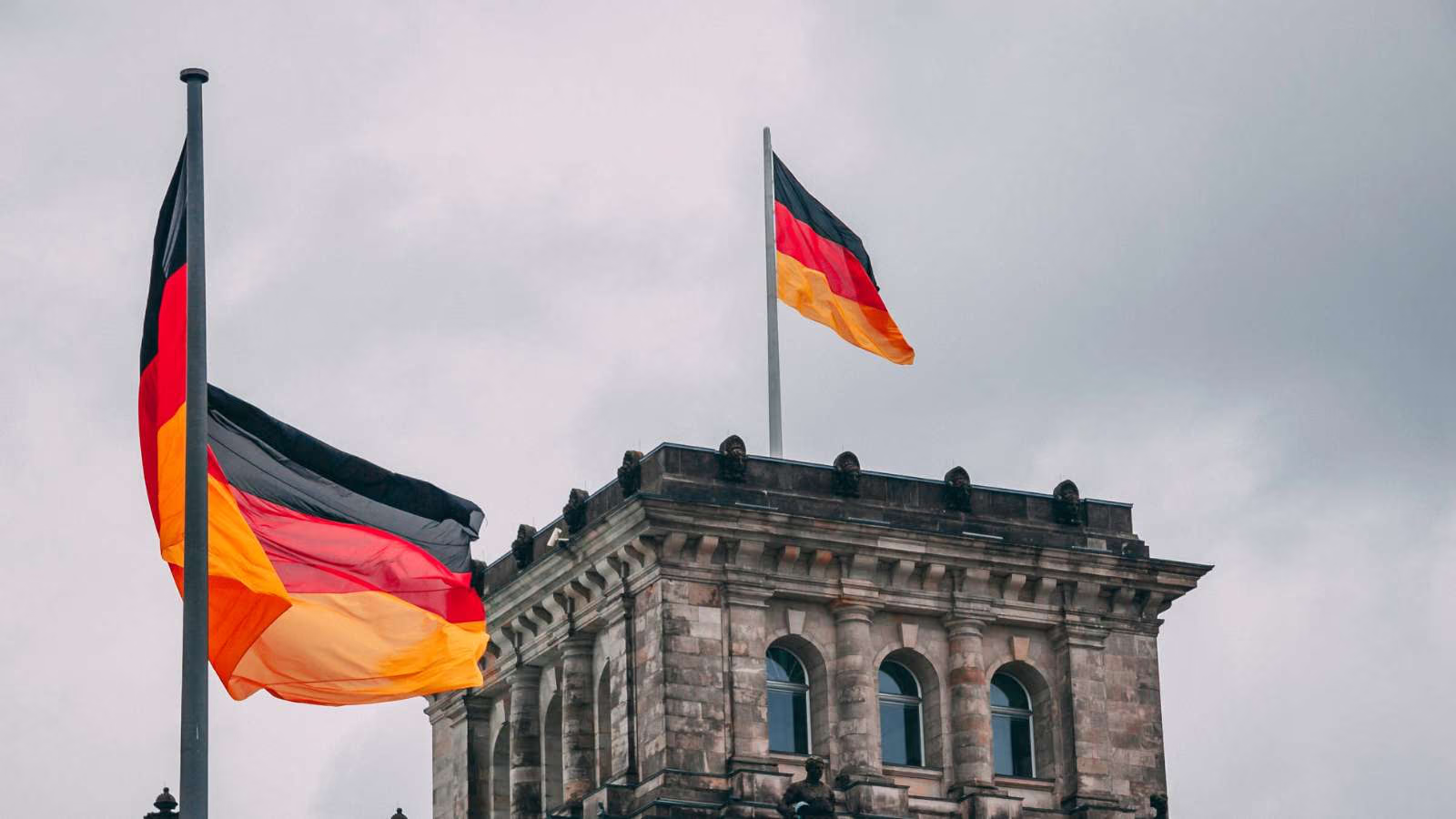
With a historic immigration vote, the extreme right in Germany defies tradition
Friedrich Merz's strategies, according to critics, break the taboo among mainstream parties about collaborating with the AfD, a party that is suspected of being a right-wing extremist and is watched…
Friedrich Merz's strategies, according to critics, break the taboo among mainstream parties about collaborating with the AfD, a party that is suspected of being a right-wing extremist and is watched by German security agencies, to prevent it from gaining power. With support from the Alternative for Germany (AfD), Germany's opposition conservatives broke a taboo on working with the far-right on Wednesday when they were approved by parliament for a proposal to significantly restrict migration.Although the proposal is not legally enforceable, the AfD's participation in passing them is significant in Germany, where a national election is scheduled for February 23 and the far-right party is predicted to come in second only to the conservatives. The leader of Germany's CDU/CSU conservative coalition, Friedrich Merz, is eager to take the lead on migration policy, which has come back into sharper focus following the arrest of an Afghan asylum seeker last week for a series of fatal stabbings. Merz's two non-binding proposals in parliament, which demanded tighter security and the closing of Germany's land borders to undocumented migrants, sparked hours of heated discussion in the lower chamber of the Bundestag.Merz was aware that he would need the AfD's backing because the resolutions were opposed by the Greens and Chancellor Olaf Scholz's Social Democrats (SPD). Only three votes were needed to pass the land boundary legislation. In an attempt to keep the AfD out of power, Merz's strategies, according to critics like Scholz, break the taboo among mainstream parties against collaborating with the party, which is watched by German security agencies on suspicion of being right-wing extremists.In an address to parliament, Scholz stated, "There has always been a clear consensus among all democrats: We do not make common cause with the extreme right since the Federal Republic of Germany was founded more than 75 years ago." "In the heat of the moment, you have violated this fundamental consensus of our republic," he said to Merz.Even though Merz's party presently rules out such a scenario, Scholz cautioned against a potential future partnership between the conservatives and the AfD following the election.In a letter to parliament, Germany's Catholic and Protestant churches cautioned that working with the far-right harmed the nation's democracy. Merz's Christian Democrats, whose name invokes their religious ties, are sure to take offence at this criticism. The Central Council of Muslims' leader, Abdassamad El Yazidi, charged that politicians were "chasing the positions of the far-right on immigration." "Migrant-affiliated groups are being demonized. In addition to being unethical, it poses a threat to our nation's social cohesiveness," he stated.After the election, forming coalitions will probably be considerably more difficult as a result of Merz's action. Senior Greens and SPD leaders claimed he had shown himself incapable of leading.Since millions of asylum seekers have arrived in recent years to escape poverty and conflict in the Middle East, Afghanistan, and Ukraine, Merz has accused the SPD and Greens of impeding what he claims is a required change in refugee policy.Since Scholz's administration passed several legislation tightening immigration regulations and increased border controls in recent years, the number of asylum applicants has decreased, but Merz argues this is insufficient.Merz runs the danger of legitimizing the far-right party and alienating mainstream conservative supporters by eroding the so-called firewall surrounding the AfD, according to political observers. According to a poll released on Tuesday by pollster Forsa, support for the CDU/CSU fell three points to 28% in the days following Merz's vow of a crackdown on migrants. Both Scholz's SPD and the AfD increased by two points to 17% and 21%, respectively.Alice Weidel, the AfD's candidate for chancellor, said on Wednesday that mainstream parties were treating her party disrespectfully.During the Bundestag discussion, she declared, "The so-called firewall is nothing more than an anti-democratic cartel agreement... (that aims) to exclude millions of voters."